Know your watch first
Before anything else, identify which tier your watch falls into. This single decision determines everything that follows.
| Watch type | Examples | Recommendation | Water resistance after DIY |
|---|---|---|---|
| Luxury | Rolex, Omega, Cartier, TAG Heuer, Breitling, IWC, Tissot (upper range) | Authorised service only | Do not wear in water |
| Mid-range | Seiko, Citizen, Rotary, Accurist, Fossil, Skagen, Sekonda (mid-range) | See a jeweller | Request water resistance test |
| Swatch | All standard Swatch quartz | DIY friendly | Coin-slot caseback — designed for this |
| Budget / fashion | Basic Casio digital, basic Sekonda, unbranded fashion watches | DIY with care | Most not significantly water resistant |
| Complicated | Chronographs, multi-function, complex Casio modules | Professional recommended | Resetting complications requires knowledge |
| Electronic wearables | Fitbit, Garmin, Polar, hybrid smartwatches | Manufacturer service | These are electronics, not watches |
Opening a watch caseback exposes the seals and gaskets that maintain water resistance. Even if you reseal carefully, you have no way of knowing whether the watch is still water resistant without a pressure test — which requires professional equipment. A watch whose battery you have changed yourself should not be worn swimming, in the shower, or near water until a water resistance pressure test has been carried out by a professional. This applies even to watches marked "water resistant to 50 metres." The rating refers to a factory-sealed watch, not one that has been opened and resealed without testing.
Luxury & mid-range watches
Leave well alone
Rolex · Omega · Cartier · TAG Heuer · Breitling · IWC · Longines · Tissot (PRX, T-Classic, Seastar and upper range)
The cost of a professional battery change on a luxury watch is small relative to the value of the watch. The cost of getting it wrong is not. Major luxury manufacturers — including Cartier, which operates a dedicated battery replacement service — actively require battery changes to be carried out through their authorised service network. This is not simply commercial; it is about maintaining the integrity of the watch.
Tissot in particular has moved firmly upmarket in recent years. Models like the PRX deserve the same care as any other Swiss luxury watch. If your Tissot is under warranty, a DIY battery change will void it. For any Tissot, the authorised dealer or an official Tissot service centre is the correct route.
Water ingress in a luxury movement is a serious and expensive repair. For a luxury watch, the only sensible course is an authorised service centre or a qualified independent watchmaker with the correct equipment and the ability to carry out a water resistance pressure test afterwards.
A local jeweller is the sensible choice
Seiko · Citizen (non-solar) · Rotary · Fossil · Skagen · Accurist · Sekonda (mid-range) · Timex Expedition and Ironman
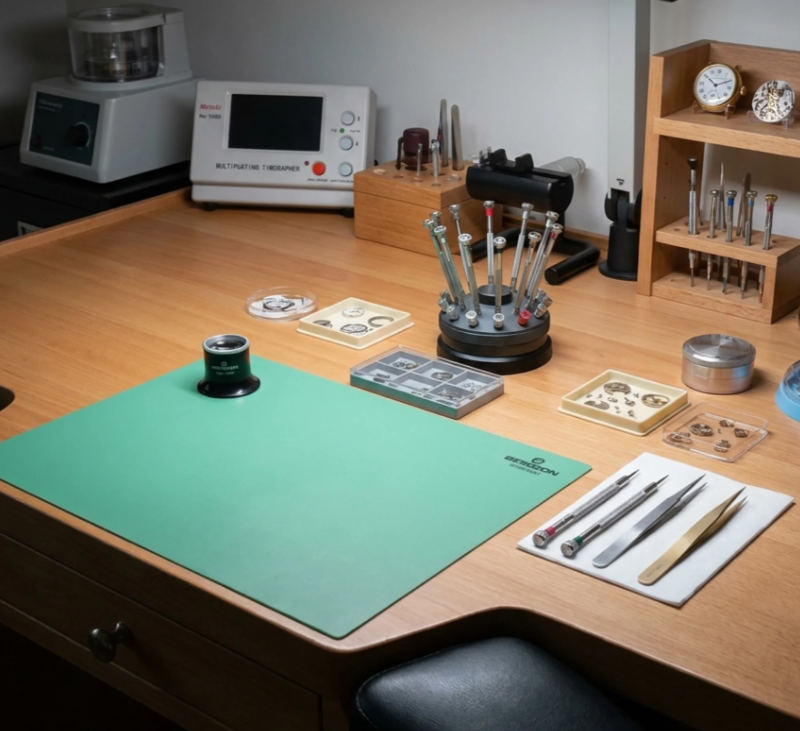
For mid-range watches, DIY is technically possible — but a qualified local jeweller will do it for a modest fee, and the peace of mind is worth it. If your watch is marked water resistant — even to 30 metres — opening the caseback exposes the seals that maintain that protection. A professional jeweller has the equipment to carry out a water resistance pressure test after fitting. You cannot do this at home.
A good independent jeweller is often better value than a brand service centre, and just as capable. Look for a member of the National Association of Jewellers for a vetted professional near you.
Budget & Swatch watches
Designed for consumer battery replacement
All standard Swatch quartz — Originals Gent, New Gent, Pop Up, Scuba, Flik Flak, Irony (non-chrono)
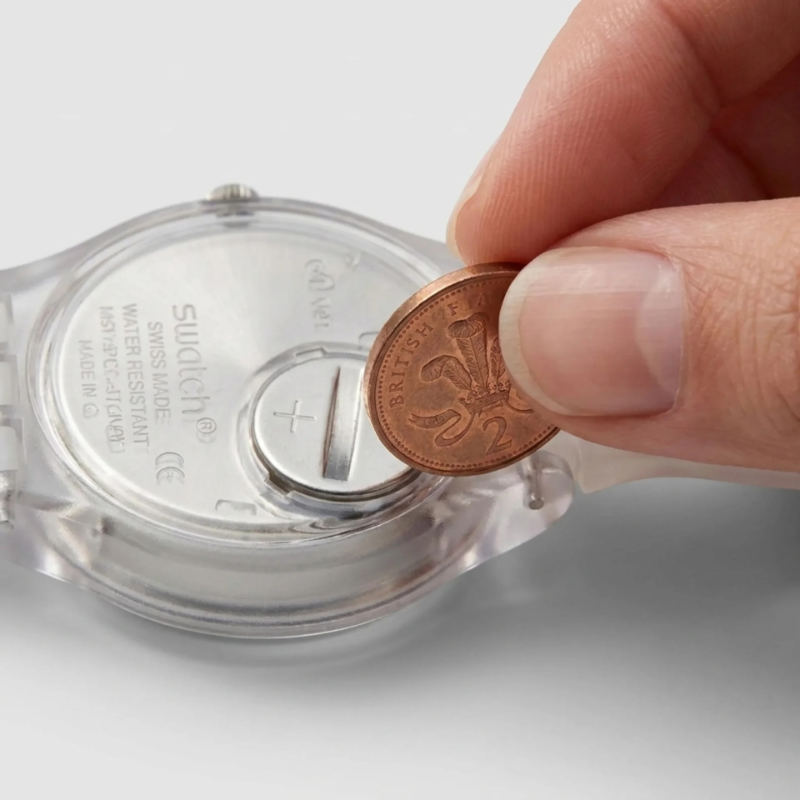
Swatch is worth calling out specifically because it is genuinely different. Standard Swatch quartz watches have a coin-slot caseback — you insert a coin, twist, and it opens. This is by design. Swatch built their watches to be maintained by the owner, and replacing the battery is a straightforward process most people can do at home.
Note: Swatch Irony Chrono, Originals Chrono, and Aquachrono models have screw-back casebacks and more complex movements — these are better handled by a jeweller. Swatch Sistem51 has an automatic movement and no battery at all. Electronic Swatch models (Access, some Beat variants) use specialist cells.
Even with a standard Swatch, work in a clean environment, handle the caseback carefully, and make sure you seat it fully when closing.
Generally fine to do yourself — but read this first
Basic Casio digital (F-91W, A168, A158 etc) · Basic Sekonda · Fashion watches · Unbranded watches
Budget and basic fashion watches are the most forgiving for DIY battery replacement. Water resistance is typically minimal on most models, and the casebacks are more accessible. Many people replace batteries in these watches successfully at home every year.
The environment you work in makes a significant difference. A single speck of dust or hair inside a watch movement can stop it working — and that can be expensive to fix. Clear a clean hard surface, lay down a lint-free cloth, close windows, keep pets out of the room, and work slowly.
The battery change is the easy part
Chronographs · Multi-function watches · Complex Casio digital modules (AW, AQ, G-Shock series)
Some watches that look straightforward have complex modules where resetting functions after a battery change requires knowledge and the correct procedure. Get it wrong and the watch may appear to work but certain functions will be incorrect or inaccessible.
Chronograph watches — those with multiple pushers and sub-dials — are a particular category where professional servicing is strongly recommended. Resetting a chronograph after a power interruption is not something most people have encountered, and a mistake can mean the watch needs to go to a service centre anyway, at greater cost.
Casio AQ-series and AW-series models with compass, thermometer, or tide functions often need module-specific reset procedures after battery replacement. The Casio manual for your specific module number contains these procedures — check the Casio support site before opening the watch.
If your watch has multiple pushers, sub-dials, or functions beyond basic timekeeping, our honest recommendation is to have it done by a professional who knows the specific movement.
Not watches in the traditional sense
Fitbit · Garmin · Polar · Apple Watch · Hybrid smartwatches
Fitness trackers, GPS sports watches, and hybrid smartwatches are electronic devices that happen to display the time. The battery in a Garmin Forerunner, a Fitbit, or a Polar heart rate watch is a sealed rechargeable cell, not a replaceable coin battery. Battery replacement — where possible at all — should go through the manufacturer or a specialist electronics repair service. Many manufacturers offer battery replacement programmes; check their website directly.
Know your caseback type
Watch casebacks come in three main types. Each requires a different approach — and using the wrong tool on the wrong caseback can cause permanent damage.
Snap-back casebacks
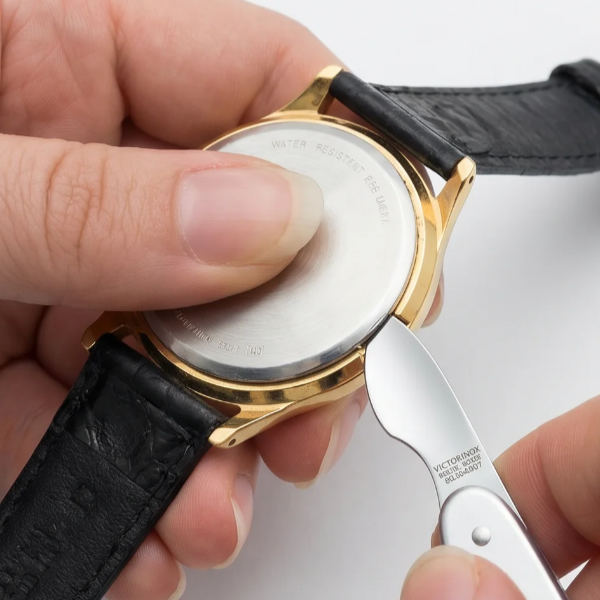
The most common type on budget watches. They clip into a groove around the case edge. A proper case back opening tool inserted into the small notch is the correct tool — a penknife blade can work but risks scratching the case or slipping. Some snap-backs are very tight; others come off easily. Be ready for the caseback to release suddenly and take care not to let it spring across the room face-down.
Screw-back casebacks
Common on water resistant and sports watches. These require a specialist case back wrench or die set — the circular type with pins that engage the notches around the caseback. Do not attempt to open a screw-back caseback with improvised tools. You will round off the notches and make it impossible to open without professional equipment. If you see notches around the edge of the caseback, it is a screw-back.
Coin-slot casebacks
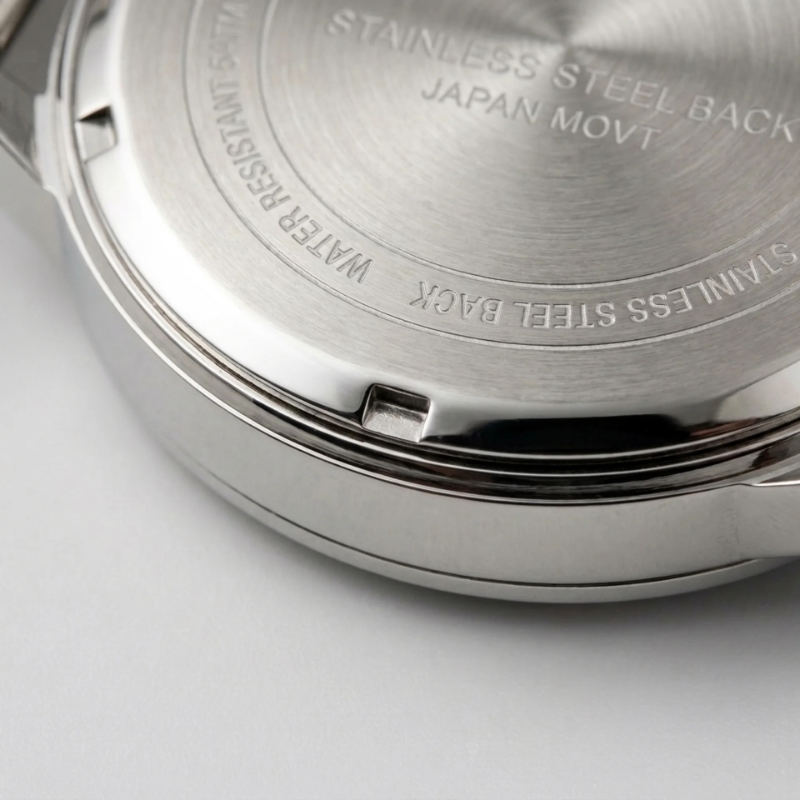
Primarily Swatch. A coin is the correct tool — a large flat coin inserted into the slot and twisted. This is specifically designed for consumer use.
The tools you need
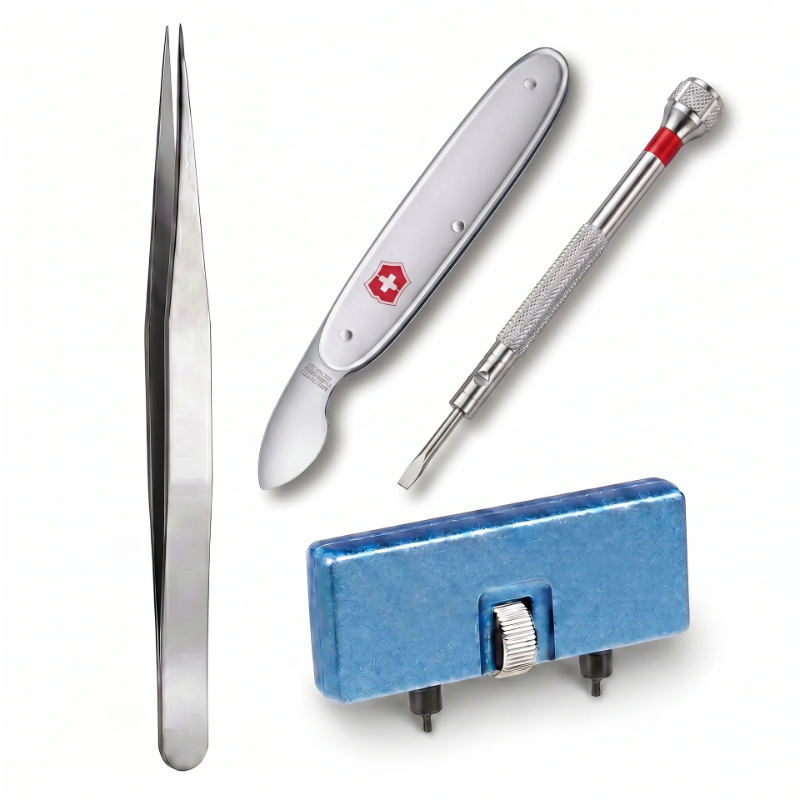
For budget watch DIY, a basic watch battery change kit covers most situations. A good kit includes a case back opening tool, a set of watchmaker's screwdrivers, a pair of non-magnetic tweezers, and a soft working surface. These are inexpensive and available on Amazon — if you have several budget watches to maintain, a kit is a worthwhile investment.
Identifying and buying the correct battery
The definitive way to identify your watch battery is to open the caseback and read the code printed on the battery itself. This is always the authoritative answer, regardless of what any guide — including this one — tells you about your watch model. Manufacturers occasionally change batteries between production runs of the same model.
The most common watch batteries
| Battery | Also known as | Size | Voltage | Typical watches |
|---|---|---|---|---|
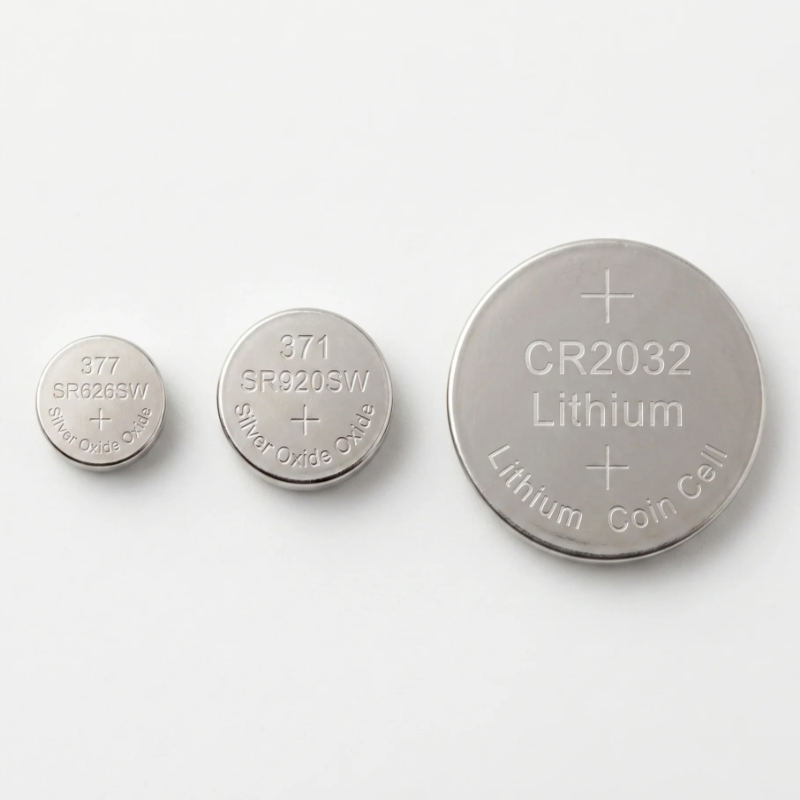
| SR626SW | 377, SR66, V377, AG4 | 6.8 × 2.6mm | 1.55V | Most analog quartz — Timex Weekender/Indiglo, Seiko standard, Citizen standard, Fossil analog, Swatch Irony/Flik Flak |
| SR621SW | 364, SR621, V364, AG1 | 6.8 × 2.1mm | 1.55V | Slim watches — slim Swatch, Casio BEM-100/106, slim ladies Seiko and Citizen |
| SR920SW | 371, SR920, V371, AG6, 370/371 | 9.5 × 2.1mm | 1.55V | Chronographs and larger analog — Casio AQ-230/AQ-800, Seiko chronographs, Fossil chronographs, Seiko 5 Sports |
| SR1130SW | 390, V390 | 11.6 × 3.05mm | 1.55V | Swatch Originals Gent, New Gent, Pop Up, Scuba, Musicall, Access |
| SR44W | 357, SR44, V357, 303 | 11.6 × 5.4mm | 1.55V | Larger analog watches. Same physical size as LR44 — see warning below |
| CR2016 | CR2016, DL2016 | 20 × 1.6mm | 3V | Casio F-91W, A158, A168, A171, B640 — NOT interchangeable with CR2032 |
| CR2025 | CR2025, DL2025 | 20 × 2.5mm | 3V | Casio AE-1000, AE-1200, AE-2000, Swatch Beat Alu |
| CR2032 | CR2032, DL2032, 2032 | 20 × 3.2mm | 3V | Casio AE-1500, AE-3000, G-Shock DW series, many fashion and smart home devices |
These two batteries are physically identical (11.6 × 5.4mm) and are frequently confused. The 357 is silver oxide with a stable 1.55V throughout its life — this is what quartz watch movements need for accurate timekeeping. The LR44 is alkaline, and its voltage drops steadily as it discharges. In an analog quartz watch, a dropping voltage means the watch gradually loses time. Professional jewellers use silver oxide (357/SR44W) exclusively for watch battery replacements — never alkaline (LR44). LR44 is perfectly fine for thermometers, toys, and laser pointers.
Silver oxide vs alkaline — why it matters
Silver oxide batteries (all SR-series) maintain a flat, stable voltage of 1.55V throughout their life, dropping sharply only when nearly depleted. Alkaline batteries (all LR-series) start at 1.5V and decline steadily. Quartz watch movements require a consistent voltage for accurate timekeeping — silver oxide delivers this, alkaline does not. Always use silver oxide (SR-series) in any analog quartz watch movement, regardless of what the cheaper alkaline equivalent may say on the packaging.
Finding a qualified jeweller
For mid-range and luxury watches, a qualified local jeweller is the right choice. The National Association of Jewellers (NAJ) maintains a directory of vetted member jewellers across the UK. NAJ members are professional, qualified, and accountable — searching their directory is a reliable way to find someone who knows what they are doing with your watch.
Find a NAJ member jeweller near you →
When you take your watch in, ask specifically about a water resistance test if your watch is marked water resistant. A good jeweller will offer this as a matter of course. The test is quick and the peace of mind is worth it — particularly if you swim or wear your watch in the shower.